

Samsung HBM2 Aquabolt – 8GB
Samsung HBM2 Aquabolt – 8GB
Samsung HBM2 Aquabolt – 8GB
High Bandwidth Memory for AI and HPC Platforms
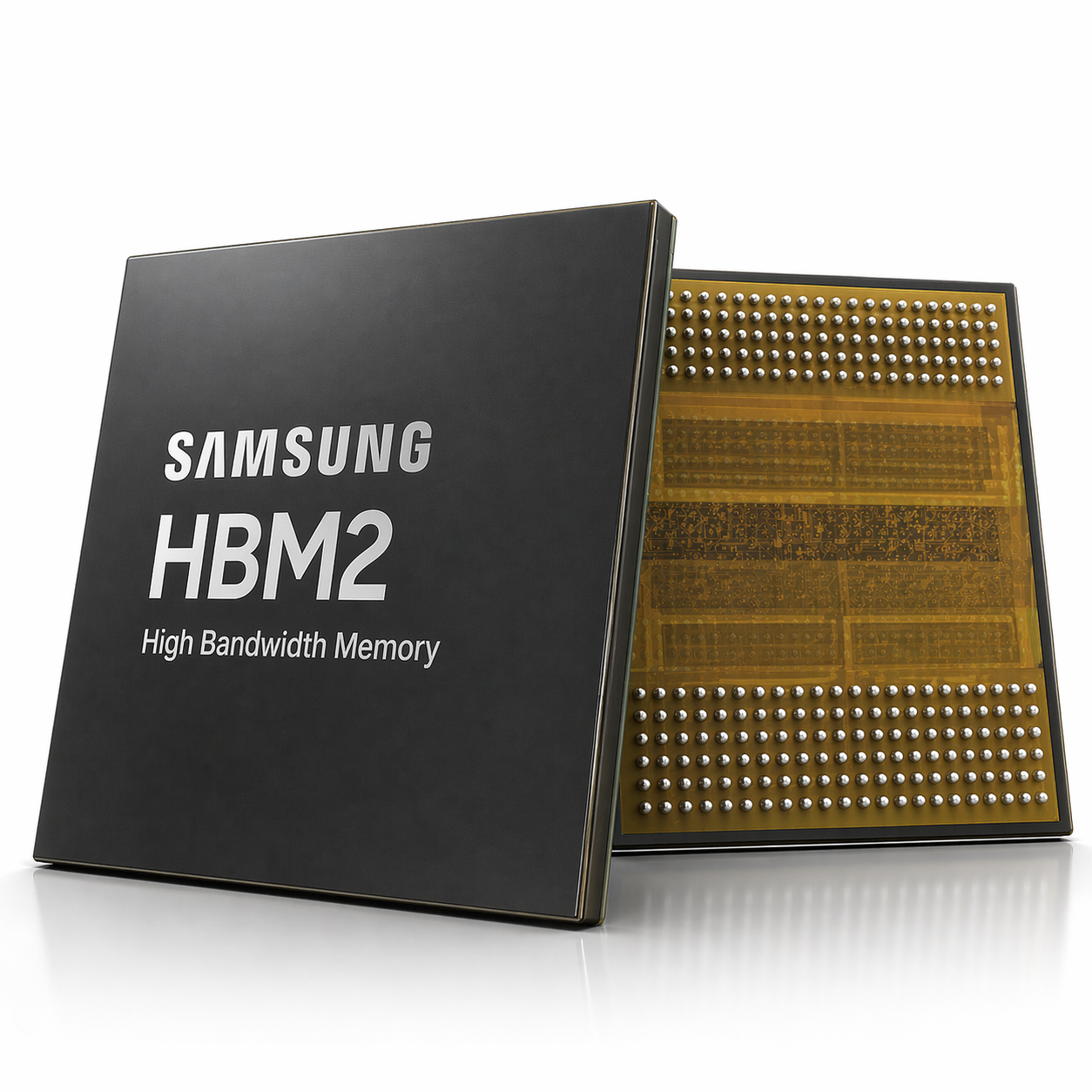
Samsung HBM2 Aquabolt 8GB is a stacked high-bandwidth DRAM solution engineered for advanced GPUs, AI accelerators, and high-performance computing systems. Utilizing TSV (Through-Silicon Via) technology and a 1024-bit wide I/O interface, Aquabolt significantly increases memory bandwidth within a compact footprint.
Each Samsung HBM2 Aquabolt 8GB stack supports up to 1024 I/O channels operating at data rates up to 2.4Gbps per pin at 1.2V. In multi-stack configurations, total system bandwidth can scale to approximately 1.2TB/s depending on platform architecture.
Technical Specifications
- Memory Type: HBM2 (High Bandwidth Memory)
- Capacity: 8GB per stack
- I/O Width: 1024-bit
- Data Rate: Up to 2.4Gbps per pin
- Voltage: 1.2V
- Architecture: TSV-based stacked DRAM
- Target Applications: AI accelerators, GPUs, supercomputing platforms
Part Numbers
- KHA884901X-MC12
- KHA884901X-MC13
- KHA884901X-MN12
- KHA884901X-MN13
Architecture and Performance
HBM2 1024-bit high bandwidth memory architecture enables extremely wide data paths compared to traditional GDDR memory designs. This approach reduces signal routing complexity while increasing effective bandwidth per square millimeter.
For system designers building high bandwidth memory for AI accelerators, Samsung HBM2 Aquabolt 8GB stack provides stable data throughput for deep learning, scientific simulation, and graphics-intensive workloads.
Thermal and Reliability Design
Aquabolt integrates enhanced thermal bump structures and reinforced base layer protection to improve mechanical durability and thermal stability in high-density GPU and accelerator environments.
FAQ
Q: Is HBM2 Aquabolt a DIMM or module?
No. HBM2 Aquabolt is a stacked DRAM package designed for integration onto an interposer or substrate within advanced GPU or accelerator platforms.
Q: What differentiates HBM2 from GDDR5?
HBM2 uses a stacked memory architecture and wide I/O interface to deliver higher aggregate bandwidth within a smaller physical area, optimized for high-performance computing systems.
Share
Request Stock & Pricing
Send the required quantity, target price and destination. We will reply with availability, lead time and quotation details.
